
Views: 0 Author: Site Editor Publish Time: 2026-08-21 Origin: Site


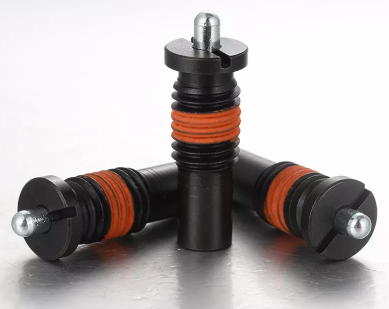
Quick positioning, alignment, indexing, and securing components in sheet metal or thin-walled enclosures presents a strict mechanical limitation. You face insufficient material thickness to support standard threaded hardware. Attempting to tap thin panels for standard plungers leads directly to thread stripping. It compromises holding force and guarantees premature mechanical failure. Compensating with welded nuts or threaded inserts adds unnecessary weight. It also increases secondary operations and drives up assembly overhead. Engineers must find a reliable way to secure these components without relying on traditional internal threads.
Specifying the correct non-threaded alternative requires a rigorous evaluation of your mechanical environment. You must analyze panel thickness, lateral load requirements, installation tooling, blind-side clearance, and vibration resistance. Selecting the right spring plunger for thin panels ensures long-term mechanical stability and repeatable indexing performance.
Panel Thickness Dictates the Fastening Method: Press-fit plungers require a minimum material thickness to maintain an interference fit, whereas plate mount and flange designs distribute loads across the panel surface, accommodating ultra-thin gauges.
Tolerance Control is Critical for Press-Fit: Successful implementation of press-fit spring plungers relies on strict hole dimensioning; improper tolerances lead to either panel deformation or plunger pull-out under dynamic loads.
Load Distribution Varies by Design: Plate mount spring plungers act as superior lateral spring plungers, offering maximum resistance to side forces and tear-out by utilizing a wider footprint secured via rivets, screws, or welds.
Assembly Speed vs. Maintenance: While press-fit (push-fit) and flange options offer rapid, automation-friendly installation, they present higher replacement complexity compared to modular or surface-mounted alternatives.
Mechanical engineering standards dictate specific rules for thread engagement. A standard threaded fastener typically requires a minimum material thickness equal to 1.0 to 1.5 times its nominal diameter. If you specify an M6 plunger, you need at least 6mm of material thickness to achieve optimal thread strength. Sheet metal enclosures, HVAC ducting, and electronic chassis often utilize 16-gauge or 18-gauge steel. These materials measure roughly 1.2mm to 1.5mm thick.
Tapping a 1.5mm panel for an M6x1.0 thread yields exactly one and a half threads. This minimal engagement cannot withstand the constant axial force exerted by an internal spring. When the operator engages the pin, the shear stress transfers entirely to that single thread root. The mathematical reality renders standard threaded plungers useless in these applications. You must transition to non-threaded retention methods to ensure mechanical integrity.
Sheet Metal Gauge (Steel) | Nominal Thickness (mm) | Max Thread Pitch Possible | Threaded Plunger Viability |
|---|---|---|---|
12 Gauge | 2.65mm | ~2.5 Threads (M6x1.0) | Marginal / High Risk |
16 Gauge | 1.52mm | ~1.5 Threads (M6x1.0) | Fail / Strips Immediately |
20 Gauge | 0.91mm | < 1 Thread (M6x1.0) | Impossible |
Thin panels rarely exist in isolation. They usually enclose tightly packed internal components. Printed circuit boards, wiring harnesses, and moving mechanisms often sit millimeters behind the panel surface. This spatial limitation dictates the maximum allowable body length of your indexing hardware.
You must measure the exact blind-side clearance before specifying a component. Limited depth often forces engineers to choose compact ball-nose designs over retractable long-nose pins. Ball-nose variants contain shorter springs and require less housing depth. If your application demands a long-nose pin for positive locking, you must carefully calculate the housing protrusion to avoid internal collisions. A pin that extends too far past the rear of the panel will strike internal wiring during retraction.
Using standard hardware in thin panels introduces severe failure modes. Thread shear occurs almost immediately under dynamic loads. When an operator engages the plunger, the lateral force rips the single thread out of the thin sheet metal. This leaves a stripped, unusable hole that requires welding and redrilling to repair.
Panel warping presents another significant risk. High-tension springs exert constant pressure against the host material. If the panel lacks structural rigidity, this constant force bows the metal outward. Furthermore, using incompatible threaded inserts can trigger galvanic corrosion. Pressing a brass insert into an aluminum panel creates a battery effect in humid environments. This rapidly degrades the host material around the installation site.
You must evaluate potential solutions against four strict performance metrics. First, retention force measures the component's resistance to axial pull-out. The fastener must stay seated when the internal spring compresses. Second, side-load capacity evaluates resistance to shear forces. The plunger body must not tilt or tear the panel when lateral pressure applies.
Third, consistent indexing pressure ensures the internal mechanism operates smoothly over thousands of cycles. Finally, installation repeatability matters for production scaling. The chosen fastening method must allow assembly line workers to install the components quickly and consistently without damaging the host panel.
Interference fits secure the push-fit body without relying on threads. The outer diameter of the plunger body measures slightly larger than the inner diameter of the receiving hole. Forcing the oversized body into the undersized hole creates massive radial pressure. This friction locks the component in place.
Manufacturers offer both smooth and knurled bodies. Smooth bodies work best in harder materials like stainless steel or high-carbon steel. Knurled bodies feature tiny ridges that bite into softer host materials like aluminum or plastics. The knurling displaces the softer material, creating a mechanical interlock that dramatically increases retention force. You must match the body style to your panel material to achieve maximum holding power.
You need exact hole preparation to make this work. You cannot simply drill a hole and insert a press-fit spring plunger. Standard twist drills create lobed, slightly triangular holes. These imperfections reduce surface contact and compromise the interference fit. The component will eventually vibrate loose.
You must use precision reamers to achieve exact circularity and strict H7 tolerances. The mathematical relationship between the plunger outside diameter (OD) and the hole inside diameter (ID) dictates success. An interference of 0.02mm to 0.05mm generally provides optimal retention. Exceeding this tolerance risks cracking brittle panels or severely deforming thin sheet metal.
Drill a pilot hole 1mm undersize.
Follow up with a standard twist drill 0.5mm undersize.
Finish the hole using a chucking reamer to hit the exact H7 tolerance.
Verify the hole diameter using a calibrated go/no-go gauge.
Press-fit designs accommodate various nose styles to match specific functional requirements. Ball-nose variants utilize a hardened steel or ceramic sphere. They provide smooth, rolling indexing. Operators use them for sliding adjustments where continuous contact occurs between the mating surfaces.
Retractable long-nose pins offer secure, positive locking. The cylindrical pin extends deeply into a mating hole, preventing any lateral movement. These pins require manual retraction via a pull ring or T-handle. You must ensure the press-fit retention force exceeds the force required to pull the retraction handle. Otherwise, the entire assembly will pull out of the panel during operation.
High-volume assembly lines benefit immensely from press-fit technology. Automated pick-and-place machines can insert these components rapidly using pneumatic presses. They eliminate the time-consuming process of thread tapping and manual torque application. This keeps the assembly line moving efficiently.
They excel in environments where lateral loads remain minimal. If the primary force vector is axial compression against the spring, a properly toleranced press-fit holds securely. They also suit applications requiring a flush surface finish, as the body can sit entirely below the panel face.
Machine vibration destroys interference fits over time. Constant micro-movements can gradually walk the smooth body out of the hole. You must evaluate the vibration profile of your machinery before specifying this type. If the machine shakes violently, a standard press-fit will fail.
Reliance on strict machining tolerances increases upstream manufacturing time. If your fabrication shop struggles to maintain tight reaming tolerances, you will experience high failure rates. Undersized holes cause panel buckling during insertion. Oversized holes result in components falling out during operation.
The integrated collar completely changes the mechanical dynamics of the installation. This collar acts as a positive mechanical stop. It prevents over-insertion during the assembly process and provides a defined seating surface against the thin panel.
When an operator applies heavy axial force to the indexing pin, the flange transfers that energy directly into the face of the panel. It does not rely solely on radial friction for axial retention. This design fundamentally solves the push-through problem common in standard press-fit applications. The collar takes the brunt of the impact.
You can install a flange spring plunger from either the front or the rear of the panel. Front-mounting remains the most common approach. The body passes through the hole until the flange bottoms out on the exterior surface. You secure it using an arbor press equipped with a custom pressing die that contacts the outer flange, not the delicate nose pin.
For extreme security, engineers often utilize retaining rings on the blind side. The plunger body features a small machined groove. Once inserted, a technician snaps a circlip into the groove behind the panel. This traps the sheet metal between the front flange and the rear circlip. Structural adhesives applied under the flange can also provide permanent, vibration-proof retention.
Absorbing axial loads directly into the panel face represents a massive structural advantage. In heavy-duty indexing applications, operators often slam mating parts against the spring pin. A standard interference fit might eventually yield and push through the thin metal.
The flanged collar distributes this impact energy across a wider surface area. It protects the integrity of the hole and ensures the plunger depth remains perfectly consistent over the lifespan of the machine. This consistency is vital for precision alignment jigs and automated packaging equipment.
The primary drawback involves surface protrusion. The collar sits proud of the panel surface. This slight elevation can interfere with flush-mating components sliding across the panel face. You must account for this extra height in your CAD models.
In thick materials, you would simply counterbore the hole to recess the flange. However, thin sheet metal lacks the depth required for counterboring. If your application demands a perfectly flat exterior surface without any obstructions, the flanged design will likely cause mechanical interference.
This design abandons the through-hole retention concept entirely. A plate mount spring plunger integrates the spring mechanism into a flat, pre-drilled base plate. You mount this plate directly onto the surface of the panel rather than relying on hole friction.
The base plate typically features two or four mounting holes. The plunger body extends either parallel or perpendicular to the mounting surface, depending on the specific bracket design. This modular approach separates the indexing mechanism from the structural fastening method. It gives you complete control over how you attach the unit to the chassis.
The base plate effectively spreads lateral and axial forces over a significantly larger surface area. When lateral shear forces hit the indexing pin, they do not concentrate on the thin edge of a single drilled hole. Instead, the force transfers through the wide base plate and distributes evenly across multiple fastening points.
This load distribution mitigates the risk of panel tear-out in ultra-thin sheet metal. It also proves invaluable when working with brittle composites or plastics that easily crack under concentrated stress. The wide footprint acts as a structural reinforcement for the host material.
Applications requiring heavy side-load resistance demand this specific architecture. Standard through-hole plungers act as levers when subjected to side loads. The pin acts as the lever arm, and the thin panel acts as the fulcrum. Heavy side loads will quickly deform the panel hole.
A plate-mounted system eliminates this leverage effect. It secures the body rigidly against the surface. It functions exceptionally well in sliding tracks, conveyor side rails, and heavy door latches where lateral impact forces are frequent and severe.
You secure the base plate using secondary fasteners. Blind rivets offer a fast, permanent solution for thin sheet metal enclosures. They require access to only one side of the panel and provide excellent shear strength. You simply match drill the panel, insert the rivets, and pull them tight.
Self-tapping screws work well in slightly thicker aluminum panels. For maximum strength in steel enclosures, spot welding the base plate provides an indestructible bond. In applications where drilling is prohibited, high-strength structural adhesives can bond the flat plate directly to the panel surface.
Specify this design for heavy-duty indexing in thin enclosures. It excels in retrofit applications where precision hole reaming equipment is unavailable in the field. Maintenance teams can easily drill standard clearance holes and rivet the plate into position using basic hand tools.
Environments with extreme vibration also benefit from this approach. Rivets and welds do not back out under high-frequency oscillation. This ensures the indexing mechanism remains permanently fixed to the chassis regardless of machine vibration.
The larger physical footprint requires more surface real estate. You must ensure adequate space exists on the panel to accommodate the wide base plate. In densely packed electronic enclosures, this space may not exist.
Secondary fastening adds steps to the assembly process. Unlike a single-step press-fit operation, plate mounting requires positioning the bracket, drilling multiple holes, and installing individual rivets or screws. This increases labor time and slows down high-volume production lines.
You must match the plunger type to your primary force vector. If the application involves high lateral shear forces—such as a heavy sliding door hitting an indexing pin—you need a plate-mounted design. The wide base prevents panel deformation.
If the primary force is axial compression—such as a component pushing directly down onto a ball-nose—a flanged design provides the necessary mechanical stop to prevent push-through. For light-duty applications with minimal forces in either direction, a standard press-fit offers the most efficient solution.
Choose a ball-nose for continuous sliding alignment. The rolling sphere reduces friction and prevents galling against mating surfaces. It works perfectly for detent mechanisms and tensioning applications where parts slide past each other frequently.
Select a long-nose pin for fixed, secure holding. The pin locks into a mating hole, preventing all lateral movement. You must factor in the depth constraints of your thin panel enclosure when selecting pin length. Ensure the retracted pin clears the mating surface entirely to allow unobstructed movement.
Select plunger bodies and nose materials based on the mating surface to prevent premature wear. Stainless steel bodies resist corrosion in harsh environments. Carbon steel bodies offer higher tensile strength for heavy industrial use.
For the nose material, steel balls provide durability against hard metal mating surfaces. If you are indexing against soft aluminum or plastic, specify a Delrin (POM) pin or ball. The polymer nose prevents scratching and galling on the softer mating component.
Compare the tooling requirements and cycle times for each method. Press-fit and flanged options require arbor presses. Once set up, an operator can install hundreds of units per hour. The throughput is exceptionally high for production environments.
Plate mounting requires riveting tools or welding stations. The cycle time per unit is significantly longer due to the multiple fastening points. However, the tooling is often cheaper and more portable, making it better suited for low-volume or field-retrofit applications.
Evaluate the difficulty of extracting and replacing a damaged component in the field. Press-fit plungers are notoriously difficult to remove from thin panels without damaging the hole. You often have to drill them out or use specialized extraction pullers.
Plate-mounted designs offer superior serviceability. A technician can simply drill out the rivets, remove the damaged bracket, and rivet a new one in its place. The original panel hole remains untouched and undamaged.
Plunger Type | Primary Load Resistance | Installation Tooling | Panel Thickness Required | Serviceability |
|---|---|---|---|---|
Press-Fit | Light Axial / Light Lateral | Arbor Press, Precision Reamer | Moderate (Needs depth for friction) | Difficult (Risk of hole damage) |
Flange | Heavy Axial / Light Lateral | Arbor Press | Thin to Moderate | Moderate |
Plate Mount | Heavy Lateral / Heavy Axial | Riveter, Drill, Welder | Ultra-Thin (Load distributed) | Easy (Drill out rivets) |
Pressing hardware into thin sheet metal carries a high risk of bending the panel. The downward force of the arbor press can easily warp a 1.5mm steel enclosure. You must mitigate this risk by utilizing proper backup tooling on the shop floor.
Always place a hardened steel die block directly beneath the panel during installation. The die block must feature a clearance hole slightly larger than the plunger body. This supports the sheet metal around the immediate circumference of the hole, forcing the metal to remain flat while the component presses into place. Control your insertion force carefully using a pneumatic press with a regulated pressure gauge.
High-vibration environments destroy interference fits. To secure press-fit and flanged components against oscillation, you must implement secondary retention strategies. Liquid retaining compounds, such as Loctite 603 or 638, provide excellent insurance against backout.
Apply a small drop of the anaerobic adhesive to the knurled body before pressing it into the panel. The compound cures in the absence of air, filling the microscopic gaps between the metal surfaces. This locks the component permanently in place. Alternatively, design secondary mechanical stops, such as rear-mounted retaining rings, to physically block the component from backing out.
Pressing dissimilar metals together in a thin panel creates a galvanic corrosion risk. If you press a stainless steel body into a zinc-plated carbon steel panel, moisture will trigger a reaction. The zinc plating acts as an anode and rapidly corrodes to protect the stainless steel.
Address this by specifying appropriate platings. Match the hardware material to the panel material whenever possible. If you must mix metals, isolate them. Use insulating structural adhesives or specify components with zinc-nickel platings that minimize the galvanic potential difference between the two surfaces.
There is no universal solution for indexing in thin panels. Standard threaded hardware fails due to insufficient material engagement. Your choice hinges entirely on balancing available material thickness, primary load vectors, blind-side clearance, and your expected assembly volume. Understanding the mechanical limitations of your specific enclosure prevents costly field failures.
Choose a press-fit design for high-volume, low-lateral-load applications where you can maintain tight machining controls. Select a flanged design when you need a positive depth stop to absorb heavy axial impacts without pushing through the metal. Opt for a plate-mounted design when your panel thickness cannot support an interference fit or when maximum lateral shear strength is non-negotiable.
Calculate your required axial and lateral end-forces to determine the necessary load capacity for your specific application.
Verify your panel material yield strength to ensure it can withstand press-fit radial expansion without cracking.
Request precise CAD models from your supplier to verify blind-side spatial clearances and prevent internal collisions.
Conduct physical prototype testing with actual production assembly tooling before finalizing the specification on the shop floor.
A: You generally need at least 2mm of material thickness to generate sufficient radial friction. Materials thinner than 2mm lack the surface area required to hold the interference fit. The component will likely tear out under dynamic loads.
A: You must use precision reaming to achieve an H7 tolerance standard. Measure the exact outside diameter of the plunger body. Size your reamed hole 0.02mm to 0.05mm smaller than that diameter. This creates optimal friction without fracturing the panel.
A: Specify a plate-mounted design when your panel is too thin to tap a full thread pitch. You should also use it when the application involves heavy lateral shear forces. The wide base plate distributes side loads across multiple fastening points.
A: Blind-side clearance dictates your maximum allowable body length. Ball-nose designs feature shorter internal springs and compact bodies. They fit perfectly in tight spaces. Long-nose pins require deeper housings to accommodate pin travel, demanding more empty space behind the panel.
A: No, the integrated collar naturally sits proud of the surface to act as a mechanical stop. Achieving a flush installation requires counterboring the panel to recess the flange. Thin sheet metal rarely possesses the depth required for this operation.
A: A plate-mounted design secured with blind rivets or spot welds provides the highest vibration resistance. If you must use a through-hole design, specify a flanged variant. Secure it with a rear retaining ring or high-strength anaerobic retaining compound.
A: Removing them from thin panels often damages the host hole. You must use a specialized extraction tool or carefully drill out the core to relieve radial pressure. After removal, you typically need to install an oversized replacement to compensate for hole wear.


